
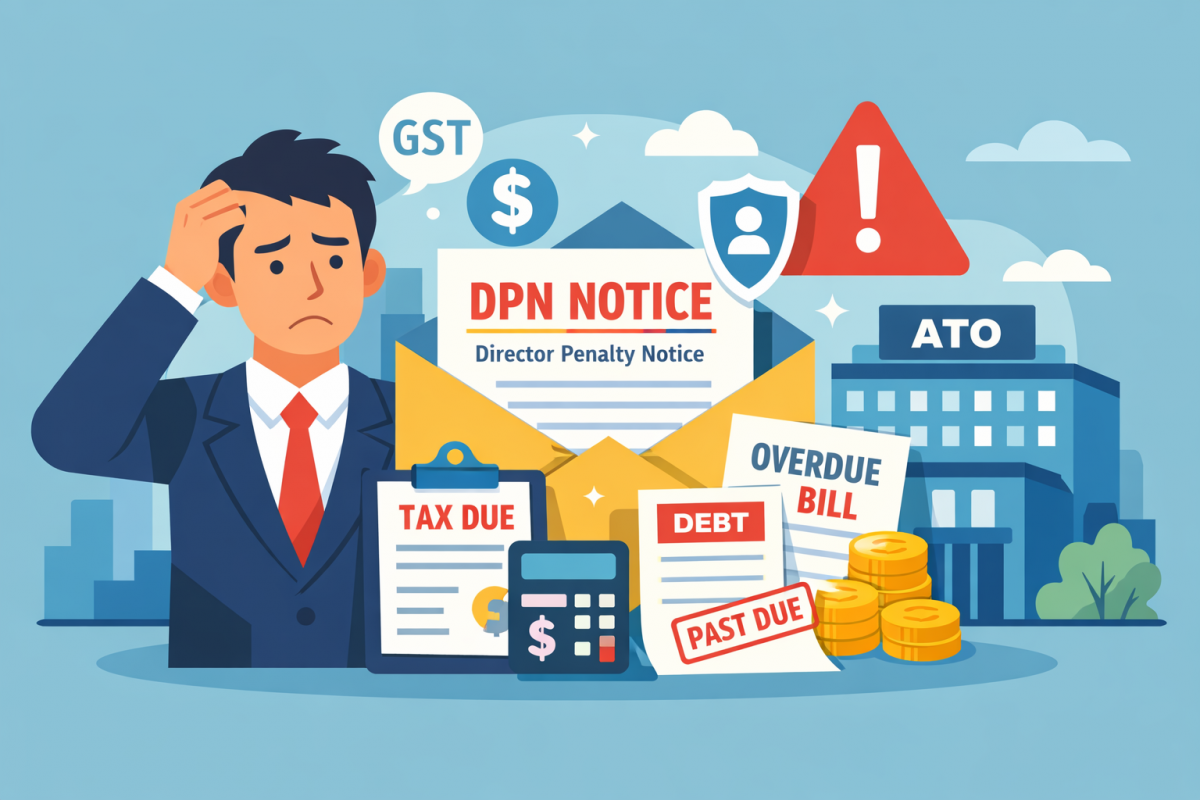
Running a business in Australia is a high-stakes balancing act. Between managing cash flow and chasing growth, it is easy for tax obligations to slip through the cracks. However, a “company problem” can very quickly become a “personal disaster” if the Australian Taxation Office (ATO) issues a Director Penalty Notice (DPN).
Recent data shows a staggering 136% spike in DPNs for the 2024–25 period, with over 84,000 notices sent out. This isn’t just a rounding error; it’s a clear signal that the ATO is ramping up its debt collection. If you are a company director, the firewall between your business debts and your personal bank account might be thinner than you think.
What exactly is a DPN?
At its core, a DPN is a tool that allows the ATO to hold directors personally liable for certain unpaid company taxes. This primarily includes PAYG withholding, GST, and Superannuation Guarantee Charges (SGC).
There are two main “flavors” of DPNs, and knowing the difference is vital:
- Non-lockdown DPNs: These occur when you have lodged your statements on time but haven’t paid the debt. In this case, you usually have a 21-day window to act—whether that means paying the debt, appointing an administrator, or entering liquidation—to potentially avoid personal liability.
- Lockdown DPNs: These are the “danger zone.” If you fail to lodge your returns within three months of their due date (or even sooner for Super), the penalty “locks down.” At this point, even putting the company into liquidation won’t save your personal assets. You are personally on the hook for the debt.
Why the Tax Ombudsman is Stepping In
With DPN complaints reaching an all-time high, the Tax Ombudsman, Ruth Owen, announced a formal review in late 2025. This investigation aims to ensure the ATO is playing fair.
The review is specifically looking at how the ATO selects cases for enforcement and how they communicate with directors. A significant focus will be placed on vulnerable directors—such as those who may have been coerced into their roles or are facing financial abuse. While this review offers hope for a more empathetic tax system, it doesn’t pause the ATO’s current collection efforts.
The Commercial Reality
For a business owner, a DPN is more than just a scary letter; it is a significant commercial risk. Ignoring one can lead to:
- Damaged personal credit ratings.
- Frozen personal bank accounts.
- Potential bankruptcy.
Tax is no longer just “paperwork”—it is a core business risk that requires the same level of attention as your sales strategy or product development.
How to Protect Yourself Today
You don’t have to wait for an Ombudsman report to safeguard your future. Here are the most effective ways to stay out of the ATO’s crosshairs:
- Lodge, Even if You Can’t Pay: This is the golden rule. Lodging on time prevents a “Non-lockdown” DPN from turning into a “Lockdown” DPN. It keeps your options open.
- Update Your Address: DPNs are often sent to the address registered with ASIC. If you’ve moved and haven’t updated your records, the 21-day clock could expire before you even see the letter.
- Prioritize Superannuation: The ATO is particularly aggressive regarding employee entitlements. Ensure SGC statements are lodged and paid as a priority.
- Act Within 21 Days: If a notice arrives, the clock starts the day it is posted, not the day you receive it. You must consult your accountant or lawyer immediately.
The current environment is a wake-up call. By being proactive and transparent with your lodgments, you can ensure your business survives the current economic dip without sacrificing your personal financial security.
Need Help?
By working with us as your professional tax accountant and mortgage broker, you can be confident that your loans are structured to protect your tax position, maximise deductions, and avoid costly mistakes, giving you greater peace of mind and more control over your financial future.
Pitt Martin Group is a firm of Chartered Accountants, providing services including taxation, accounting, business consulting, self-managed superannuation funds, auditing and mortgage & finance. We spend hundreds of hours each year on training and researching new tax laws to ensure our clients can maximize legitimate tax benefit. Our contact information are phone +61292213345 or email info@pittmartingroup.com.au. Pitt Martin Group is located in the convenient transportation hub of Sydney’s central business district. Our honours include the 2018 CPA NSW President’s Award for Excellence, the 2020 Australian Small Business Champion Award Finalist, the 2021 Australia’s well-known media ‘Accountants Daily’ the Accounting Firm of the Year Award Finalist and the 2022 Start-up Firm of the Year Award Finalist, and the 2023 Hong Kong-Australia Business Association Business Award Finalist.
Pitt Martin Group qualifications include over fifteen years of professional experience in accounting industry, membership certification of the Chartered Accountants Australia and New Zealand (CA ANZ), membership certification of the Australian Society of Certified Practising Accountants (CPA), Registered Australia Tax Agents, certified External Examiner of the Law Societies of New South Wales, Victoria, and Western Australia Law Trust Accounts, membership certification of the Finance Brokers Association of Australia Limited (FBAA), Registered Agents of the Australian Securities and Investments Commission (ASIC), certified Advisor of accounting software such as XERO, QUICKBOOKS, MYOB, etc.
This content is for reference only and does not constitute advice on any individual or group’s specific situation. Any individual or group should take action only after consulting with professionals. Due to the timeliness of tax laws, we have endeavoured to provide timely and accurate information at the time of publication, but cannot guarantee that the content stated will remain applicable in the future. Please indicate the source when forwarding this content.
By Yvonne Shao @ Pitt Martin Tax
